✦
Everyday visual comfort
Designed for adults who want nutritional support for eyes challenged by long screen sessions, changing routines, and everyday environmental stress.
◌Plant-based eye support
Meet VisiFlora, a daily eye-wellness formula built around antioxidants, vitamins, minerals, and botanicals. It is designed to fit thoughtfully into a modern routine shaped by screens, aging, and everyday visual demand.
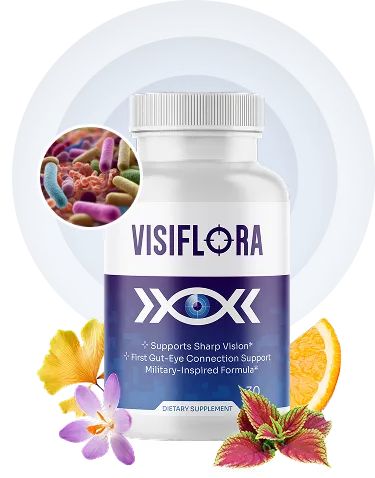
Thoughtfully positionedfor adult eye wellness
Plant-forward blendwith vitamins and minerals
Routine friendlyuse only as label-directed
Informational guideclear, balanced context
01 / A considered approach
Long hours of close-up focus, irregular breaks, dry indoor spaces, and normal aging can all shape how comfortable your eyes feel. VisiFlora is presented as nutritional support for people who want to make eye wellness part of a consistent daily routine.
Its concept is simple: combine antioxidant nutrients and plant-based ingredients that complement normal eye structures, including the retina and macula, while encouraging a broader view of wellness that includes diet, digestion, circulation, sleep, and professional eye care.
02 / Everyday support
Supportive language matters: these are wellness goals, not promised outcomes. Individual experiences vary.
Designed for adults who want nutritional support for eyes challenged by long screen sessions, changing routines, and everyday environmental stress.
The formula is positioned around antioxidants, vitamins, minerals, and botanicals selected to complement normal retinal and macular wellness.
VisiFlora's product story connects balanced nutrition and nutrient absorption with long-term eye care—an inside-out approach to daily wellness.
Understanding daily eye demand
A phone, laptop, or tablet keeps attention fixed at a relatively short distance. During a concentrated work session, people may blink less often, remain in one posture, and continue focusing without natural pauses. By the end of the day, that pattern may be associated with tired-feeling eyes, temporary blur, dryness, or difficulty shifting focus. These experiences do not automatically mean that an eye is damaged, but they are useful reminders to examine the working environment and daily habits.
Screen comfort depends on more than the number of hours spent online. Display brightness, text size, viewing distance, glare, room lighting, airflow, sleep quality, contact-lens use, and an outdated prescription can all influence how the eyes feel. A supplement cannot correct poor ergonomics or an unrecognized vision problem, which is why VisiFlora is best considered one optional part of a broader wellness routine.
Short visual breaks are simple but valuable. Looking across a room or out of a window gives the focusing system a change of distance. Comfortable text sizing can reduce squinting, while positioning a screen slightly below eye level may make long sessions feel more natural. Deliberate blinking, sensible hydration, and avoiding direct airflow toward the face can also support comfort in dry indoor environments.
Nutrition belongs in this foundation as well. Colorful vegetables, leafy greens, fruit, protein sources, and healthy fats supply a variety of nutrients that the body uses throughout life. VisiFlora is presented as a convenient way to add selected nutrients and botanicals, but it should not be used to justify a limited diet. Consistency across food choices, rest, movement, screen habits, and eye examinations is more meaningful than relying on one product alone.
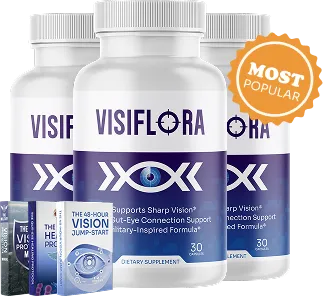
Product appearance and label details may change. Always review the bottle you receive.
03 / Formula overview
The product website highlights the following ingredient groups. Exact amounts, inactive ingredients, allergens, and directions should be confirmed on the current Supplement Facts panel before use.
Marigold-derived carotenoids commonly associated with macular nutrition.
A carotenoid the body can convert to vitamin A as needed.
A traditional botanical valued for its naturally occurring plant compounds.
Antioxidant nutrients that help protect cells from oxidative stress.
Minerals involved in many normal metabolic and cellular processes.
The product page also highlights saffron, eyebright, ginkgo, and other plant ingredients.
Ingredient context
Ingredient names can sound impressive, but a responsible evaluation looks at the complete label, the amount supplied, personal health needs, and the quality of the overall routine. No single nutrient can represent the full complexity of healthy vision.
Carotenoids are naturally occurring pigments found in many colorful plants. Lutein and zeaxanthin are frequently discussed in relation to the macula, while beta-carotene can serve as a source of vitamin A. That does not mean more is always better. The actual serving amount, diet, smoking history, medicines, and medical guidance all matter when deciding whether a particular formula is appropriate.
Antioxidants help the body manage oxidative processes that occur during normal metabolism and environmental exposure. They support many tissues, not only the eyes. A label should state how much of each vitamin is present and how that amount compares with other products you use. Combining several supplements without checking totals may create unnecessary duplication.
Minerals participate in normal enzyme activity, metabolism, and cellular function. They are needed in specific amounts, and both insufficient and excessive intake can be undesirable. Check whether VisiFlora contains zinc, copper, selenium, or other minerals that are already present in a multivitamin, fortified food, or separate eye formula.
Plant-based does not automatically mean risk-free. Botanical ingredients may be unsuitable for some people or may interact with medicine. Names used in traditional wellness are not proof of a guaranteed result. The safest approach is to verify the exact extracts and amounts on the label, then discuss them with a professional who understands your health history.
04 / The bigger picture
VisiFlora's message emphasizes a gut–eye connection. A practical interpretation begins with the fundamentals: a varied diet supports nutrient intake, the digestive system helps process that nutrition, and the body transports nutrients to tissues—including the eyes.
This is a wellness framework, not proof that a supplement can repair or reverse a vision problem. Eye symptoms and diagnosed conditions belong in the care of a qualified optometrist or ophthalmologist.

05 / Build the routine
Use only the serving instructions printed on the current bottle.
Regularly look away from screens and allow your focusing muscles to relax.
Prioritize colorful produce, leafy greens, protein sources, and healthy fats.
Use suitable UV protection outdoors and maintain sensible hydration.
Routine examinations can identify changes a supplement cannot evaluate.
Is it a sensible fit?
VisiFlora may appeal to an adult who wants a convenient eye-wellness product, understands that supplements provide nutritional support rather than medical treatment, and is willing to check the label carefully. It may also interest people with screen-intensive routines or those building a broader healthy-aging plan that already includes balanced food choices and routine eye examinations.
It is less suitable for anyone expecting glasses-free vision, a cure for an eye condition, or guaranteed changes within a fixed period. Marketing language should never replace realistic expectations. If a visual problem affects reading, driving, work, balance, or daily safety, the right next step is a professional examination—not experimentation with a supplement.
Before you decide
Check the full ingredient panel for allergies and overlaps with other supplements. Speak with a healthcare professional before use if you take medication, have a health condition, are pregnant or nursing, or are under medical care.
Seek prompt professional help for sudden or severe eye pain, abrupt vision loss, new flashes or floaters, injury, marked redness, or a curtain-like shadow in your field of vision.
Set realistic expectations
Begin by defining what you are actually trying to support. “Better vision” is too broad to measure and can mean different things to different people. A practical evaluation might focus instead on whether the product is easy to use as directed, fits the budget, agrees with the digestive system, and sits safely alongside existing medicines and supplements. It is also worth noting whether screen comfort changes after improving lighting, taking more breaks, sleeping consistently, or updating an eyewear prescription.
Avoid changing several parts of the routine at once and then crediting one capsule for every difference. Personal impressions are vulnerable to daily variation and expectation. Keep the comparison simple, never exceed the label serving, and stop if an unwanted effect appears. If no meaningful value is evident, there is no reason to continue indefinitely merely because a product is described as natural.
06 / Questions, answered
Clear information helps you compare the formula with your needs and health history.
VisiFlora is marketed as a daily dietary supplement for adults seeking nutritional support for eye wellness. It is not a medicine and is not intended to diagnose, treat, cure, or prevent disease.
Adults with screen-heavy routines or those thinking about healthy aging may explore one as part of a wider wellness plan. A supplement should complement—not replace—eye exams, balanced nutrition, sleep, hydration, and sensible screen habits.
Follow the directions and serving size printed on the current product label. Do not take more than directed. The bottle label is the best source for the latest instructions.
Ask a qualified healthcare professional first, especially if you take prescription medicine, use other supplements, have a medical condition, are pregnant or nursing, or are preparing for a procedure.
No dietary supplement should replace prescription eyewear, medical treatment, or professional eye care. Sudden vision changes, eye pain, flashes, new floaters, or a curtain-like shadow require prompt assessment.
There is no reliable universal timeline. Nutritional supplements do not produce the same experience for everyone, and subtle changes in comfort can also be influenced by screen time, sleep, hydration, lighting, allergies, eyewear, and existing eye conditions. Avoid treating a short-term impression as proof. If you choose to use VisiFlora, follow the label consistently and evaluate it alongside the rest of your routine rather than expecting an immediate transformation.
Review the complete Supplement Facts panel, serving size, daily directions, other ingredients, allergen statements, storage guidance, lot information, and expiration date. Compare every active ingredient with medicines and supplements you already use. The current bottle should take priority over summaries found online because formulas, quantities, packaging, and directions can change.
Stop using the product and seek advice from a qualified healthcare professional. Urgent symptoms—such as trouble breathing, facial swelling, severe dizziness, sudden vision changes, intense eye pain, or a rapidly worsening reaction—require prompt medical attention. Keep the bottle or a clear photograph of its label available so a professional can review the exact ingredients and serving information.
Continue your research